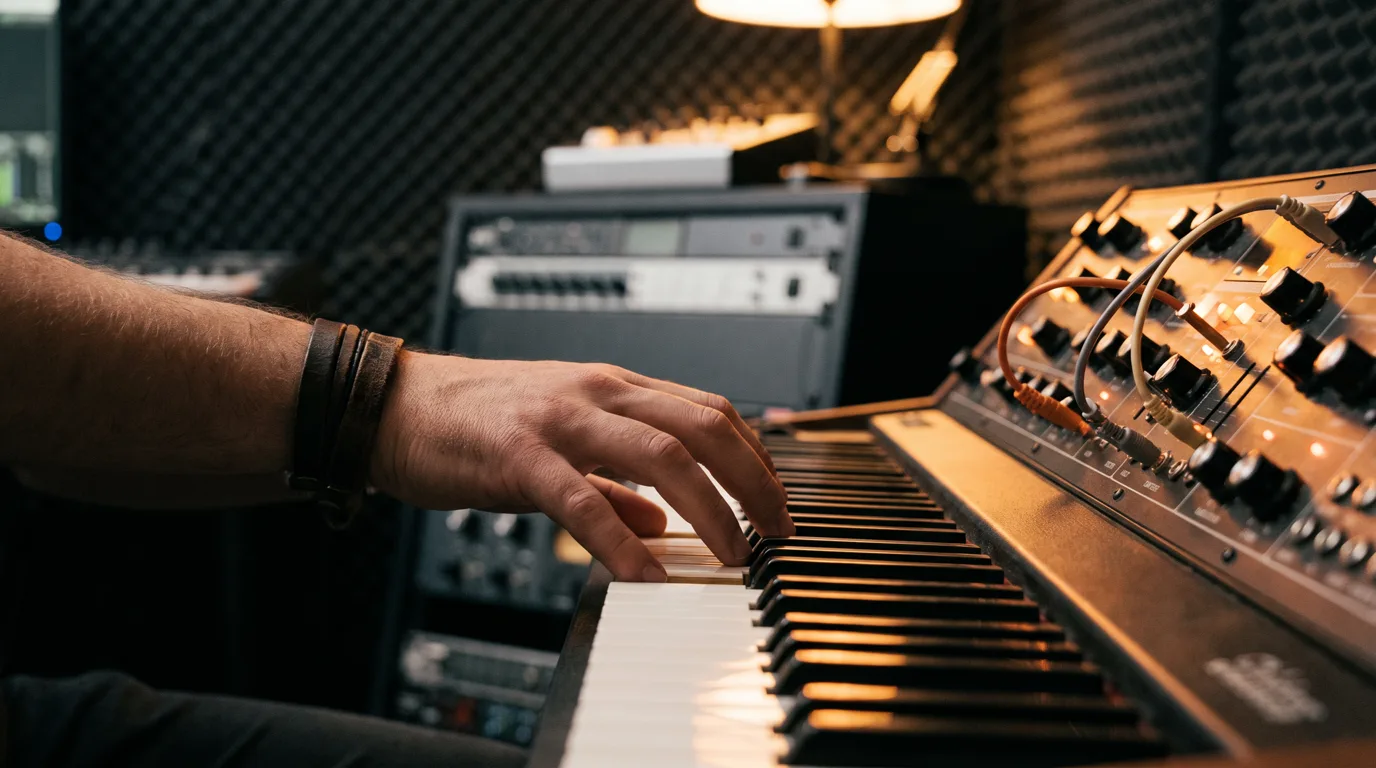
A melodic type beat lives or dies on one thing: the melody. Not the mix, not the 808, not the hi-hat rolls. If the loop does not move an artist in the first four bars, nothing you stack on top will save it.
That changes how you build. You are not making a beat and adding a melody. You are making a melody and protecting it. Everything else, the drums, the low end, the arrangement, exists to frame the loop and leave room for a voice. Here is how to build a melodic type beat an artist can actually hear themselves on.
What makes a melodic beat sell
A melodic beat sells when an artist hears a song in it before the first hook lands. That is the whole product. They are not buying your drum pattern. They are buying the feeling the melody gives them and the space to put their voice on top.
So sell the emotion, not the complexity. A simple four-bar loop with a clear mood beats a busy arrangement that shows off. Sad, triumphant, nostalgic, cold: pick one and commit. The beats that move on BeatStars are the ones a rapper can describe in a single word.
Start from a sample or a chord idea
There are two honest ways in. Start from a sample, or start from a chord progression. Both work. The sample route gives you character for free: a chopped loop already has texture, imperfection, and a mood you did not have to program. The chord route gives you control: you pick the key, the voicing, and the movement.
If you go the sample route, you need source material you can actually use. Pull a loop, chop it, pitch it, and build your melody around the strongest bars. Crate Machine writes the Suno prompt that hands you that clearance-free source in the first place. If you go the chord route, keep it to three or four chords in a minor key and let a Rhodes, a guitar, or a soft pad carry them.
Play the loop with no drums for eight bars. If it already sounds like a song, you have a beat. If it only works once the drums drop, the melody is not doing its job yet.
The four-bar loop that hooks
The core of a melodic type beat is a four-bar loop that repeats without getting old. That is harder than it sounds. A loop that hooks has one clear lead line, a little rhythmic push or pull, and a note or two that stay unresolved so your ear wants the next pass.
Build it, then test it the boring way: loop it for a full minute and see if you get tired. If you reach for a change after eight bars, the melody is too busy or too static. Strip it back to the two or three notes that carry the emotion. The best melodic loops are almost too simple on paper.
Space for the artist (arrangement)
This is where most beats fail. A melodic type beat is not for you, it is for a voice that is not in the room yet. Leave the pocket open. Do not fill every bar with counter-melodies, ad-lib stabs, and busy fills. The artist needs that frequency range and that space to write.
Arrange in blocks: a short intro on the melody alone, a main section with drums and 808, a stripped section where the beat pulls back so a hook can breathe. Give them an obvious place to start rapping and an obvious place to sing the hook. If a beat is wall to wall from bar one, most artists skip it.
Sound selection and mix feel
Sound choice is half the beat. A melodic loop on a cheap default piano sounds like a demo. The same notes on a warm Rhodes, a filtered guitar, or a detuned pad sound bought. Layer the lead with a quieter support sound an octave up or down for depth, then filter and pan so they do not fight.
You do not need a mastering chain to compete. You need clean levels, an 808 that sits under the melody instead of covering it, and drums that punch without stealing attention. A rough but balanced mixdown that plays well on phone speakers sells more beats than a loud, cluttered one. Reference a released track in the same style and match the feel, not the loudness.
Get your melodic source from Crate Machine
The hardest part is starting with material worth building on. A blank project and a stock piano is where most melodic beats die. Give yourself a source with character instead: a chop-ready loop with texture and mood already baked in.
That is what Crate Machine is for. Tell it the genre, era, mood, and instrument you want, and it writes a structured Suno prompt that returns instrumental, loopable source material with no vocals to fight. Pull the loop, find your four bars, and you are building a melody instead of staring at an empty grid.
FAQ
What is a melodic type beat?
A melodic type beat is an instrumental built around a lead melody, usually a loop of keys, guitar, or synth, made in the style of a named artist so rappers and singers can find it and record on it. The melody carries the beat, not the drums.
What key and BPM for melodic trap?
Most melodic trap sits between 130 and 150 BPM, often written and felt in half time, in a minor key. Common choices are minor scales like F minor, G minor, or C minor. Pick the key that fits your melody, not a rule.
How long should the intro be?
Keep the intro short. Give the artist the main loop in the first four to eight bars, usually within the first fifteen seconds. A long intro loses the listener before they hear the part they would record on.
For the full path from a raw loop to a finished, sellable beat, read how to make a beat from a sample.